
VITA NON PROFIT event International cooperation after Hurricane Trump
16/05/2025
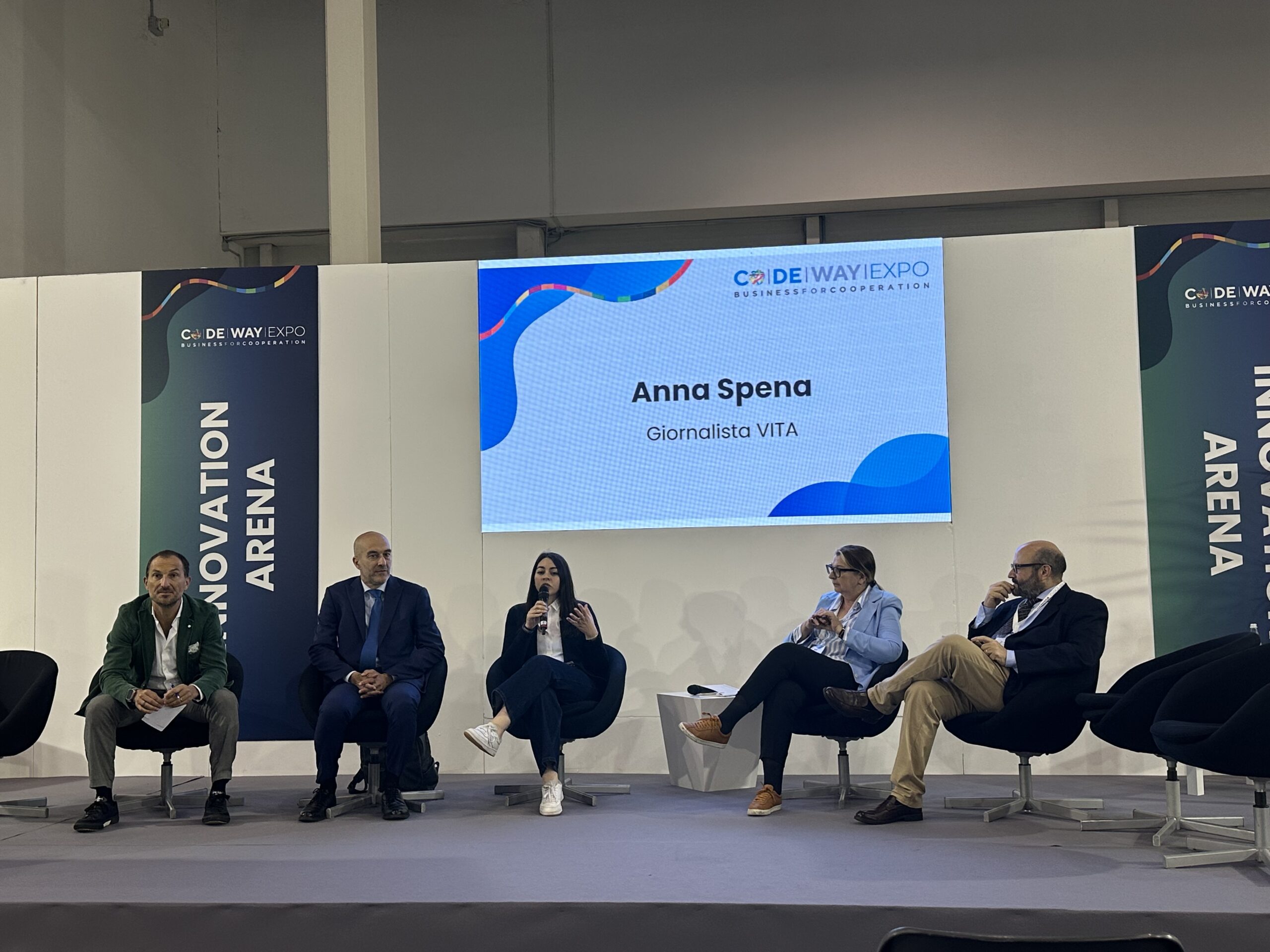
President Donald Trump’s decision to freeze funds for projects already contracted by USAID for 90 days, followed by the start of the dismantling of the agency, has generated a climate of profound uncertainty for the entire international cooperation sector. A severe blow, considering that USAID used to cover about 40% of global ODA funding. Against this critical backdrop, the meeting entitled ‘International Cooperation after Hurricane Trump’, promoted by VITA Non Profit and moderated by journalist Anna Spena, offered an important opportunity to analyse the consequences of the current crisis and discuss possible response strategies.
In his speech, Sandro De Luca, President of LINK 2007, described a situation of great instability, caused by the reduction of financial commitments of many institutional donors and, above all, by the dismantling of USAID, which has had direct repercussions not only on bilateral funding, but also on funding channelled through UN agencies. To all this was added a phase of profound uncertainty, marked by a lack of clear communication from international agencies. The result, De Luca explained, has been a widespread slowdown in activities and a climate of precariousness that directly affects the operating organisations. In contexts such as Ethiopia, the funds foreseen for 2025 are more than half less than for 2023, with inevitable consequences on the continuity of programmes that guarantee basic services.
For many NGOs, which had advanced resources on USAID projects, there are now huge uncertainties about when repayment will be made, due in part to the difficulties associated with the dismantling of the US agency’s administrative structure. ‘These are serious financial exposures,’ he said, ‘which in some cases put the very sustainability of the organisations at risk.’ De Luca acknowledged the Italian government’s commitment in this critical phase, but reiterated the need to urgently address the problem of liquidity, which today weighs heavily on the budgets of many cooperation organisations. In this framework, he concluded, it is fundamental to strengthen coordination between the various actors and to work on the construction of shared tools, in order to make the architecture of international aid more effective. ‘What we are experiencing,’ he said, ‘is not a passing crisis, but a structural crisis, which requires structured and far-sighted responses.’
Silvia Stilli, president of the AOI network, gave a concrete example: a member NGO working in north-east Syria had to lay off all its management staff due to the suspension of funds. ‘The lack of liquidity,’ he explained, ‘turns into a structural problem of sustainability. The ability to intervene in critical areas such as refugees is also reduced’. Stilli also highlighted the worrying trend of decreasing investments in official development aid, while resources allocated to defence are increasing, in an increasingly unstable international framework.
Roberto Mengoni, Head of Development Cooperation with Africa at MAECI, confirmed that the USAID funding halt was ‘a shock’ for many organisations, especially those active in emergency contexts. ‘We obtained some waivers to secure the most sensitive programmes,’ he explained, ‘but now we need a structured response.’
Italy, Mengoni pointed out, has not cut the funds for cooperation, unlike other European countries such as Belgium and the Netherlands, but neither has it increased them. The objective is to optimise the available resources, working with a systemic approach, reducing fragmentation, and networking the different actors to maximise the impact of the projects.
The business world has also been hit by the crisis. Filippo Prosperi, director of the company De Lorenzo, which operates in technical and vocational training, denounced delays and operational blocks: ‘Funding cuts slow down not only health programmes, but also those dedicated to training young people. This has a profound impact on local development’. Prosperi also lamented the excessive bureaucracy in international calls for tenders, which slows down the implementation of projects and makes it more difficult for companies to participate.
To get out of the crisis, the speakers shared some concrete proposals. Sandro De Luca stressed the need to simplify procedures, working together with the bureaucracy to create more effective tools. Silvia Stilli reiterated the importance of co-planning and co-programming, also reviewing the role of AICS offices in partner countries to facilitate real joint work between all actors.
What is needed, they agreed, is a greater coherence of the system and a strengthening of the steering cabins, so that institutions, NGOs, businesses and civil society can face the new challenges of international cooperation in an integrated manner.
The final question remains open: will Italy and Europe be able to fill the gap left by the United States? Common strategies, agile instruments and above all a strong political will are needed in order not to abandon millions of people.