
12th plenary meeting of the National Council for Development Cooperation (CNCS)
17/03/2026
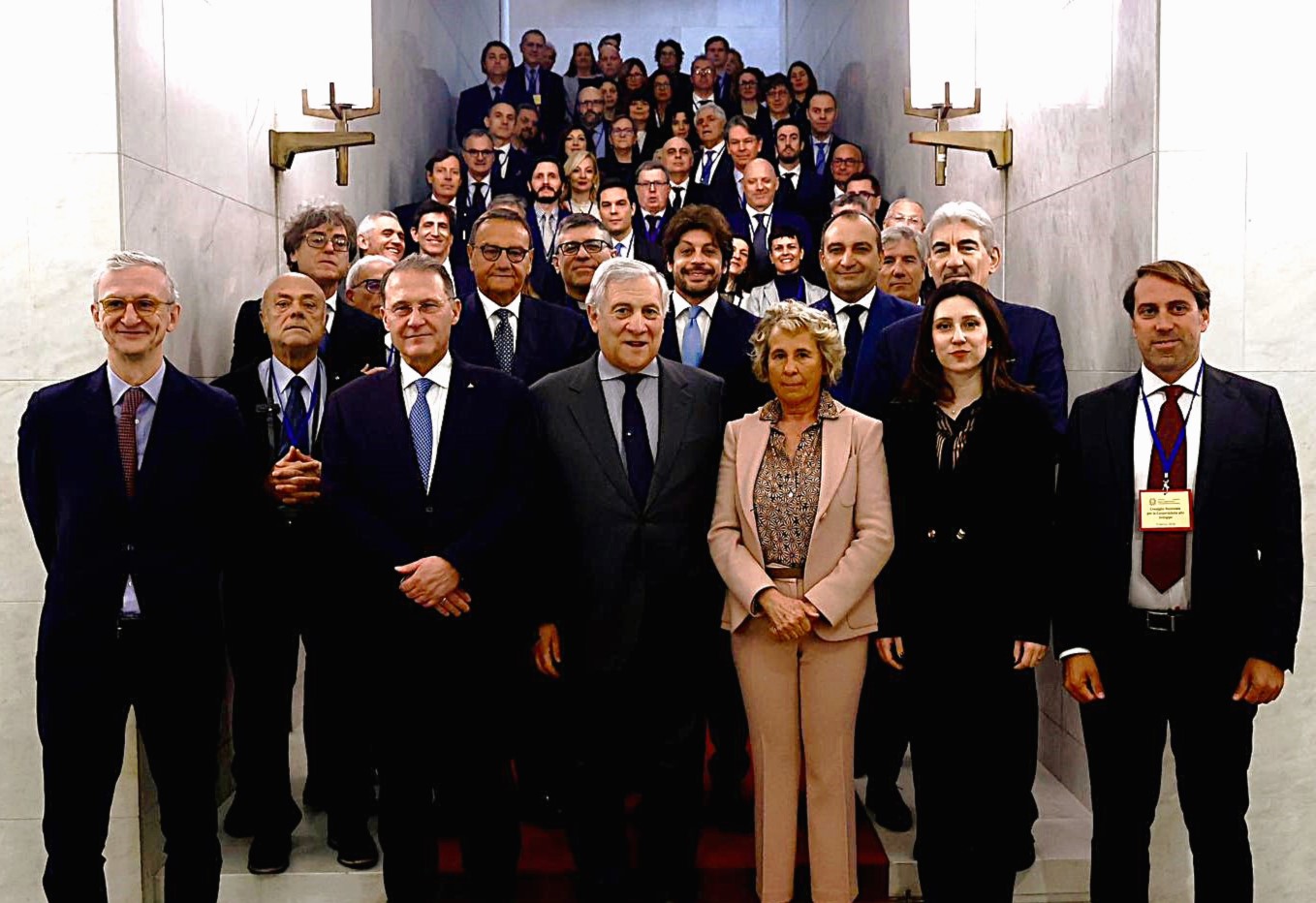
On the 9th of March 2026, Farnesina hosted the 12th plenary meeting of the National Council for Development Cooperation (CNCS), chaired by the Minister of Foreign Affairs, Antonio Tajani, alongside Deputy Minister Edmondo Cirielli. The CNCS is a body established under Law 125/2014 and brings together the main public and private actors of the Italian development cooperation system. It serves as a permanent forum for dialogue among stakeholders, convening at least once a year to discuss strategies, programming, policy guidelines, operational tools and the effectiveness of cooperation policies. The session was also attended by the President of the Foreign Commission and Senate’s Defence, Stefania Craxi, and the Onorevole Federica Onori.
In his opening remarks, Minister Tajani highlighted how the Farnesina operates by promoting collaboration among institutions, civil society, the private sector and international organisations, reaffirming that today’s major global challenges require a strong and efficient multilateral approach. He also devoted particular attention to the crisis in Sudan, announcing the reopening of the AICS office in Port Sudan. The chairing of the session was subsequently handed over to Deputy Minister Cirielli, who launched consultations with the CNCS in preparation for the next edition of “COOPERA”, the national public conference on development cooperation, scheduled to take place in Rome on 26–27 May 2026.
During the plenary, the President of LINK 2007 – Cooperazione in Rete, Sandro De Luca, took the floor, highlighting the need for cooperation policies capable of building strong relationships, strengthening institutions, and supporting equitable and sustainable development, particularly in countries characterised by high levels of fragility and vulnerability. He stressed that strong system-wide innovation capacity and genuine cooperation among all actors involved are essential to addressing global challenges. De Luca also recalled the key role of LINK 2007 and civil society networks, which represent a wealth of experience, expertise and long-standing partnerships in countries of strategic importance for the entire Italian cooperation system.
These organisations are engaged in ongoing dialogue with public institutions, particularly with the Directorate-General for Development Cooperation and the Italian Agency for Development Cooperation. This exchange aims to introduce the highest possible level of innovation within the current framework in order to strengthen the effectiveness of action and Italian cooperation, improve the quality of partnerships and promote greater policy coherence. At the same time, De Luca noted that some innovations will require, over time, an update of the regulatory framework governing the sector, reaffirming LINK 2007’s commitment to contributing with concrete ideas and proposals.
The President of LINK 2007 concluded by expressing confidence in the capacity of the actors and institutions involved in the Italian development cooperation system to respond to current challenges. In this perspective, COOPERA can represent an opportunity to promote ideas and experiences aimed at strengthening the quality and effectiveness of Italian cooperation.
Photo: www.aics.gov.it